
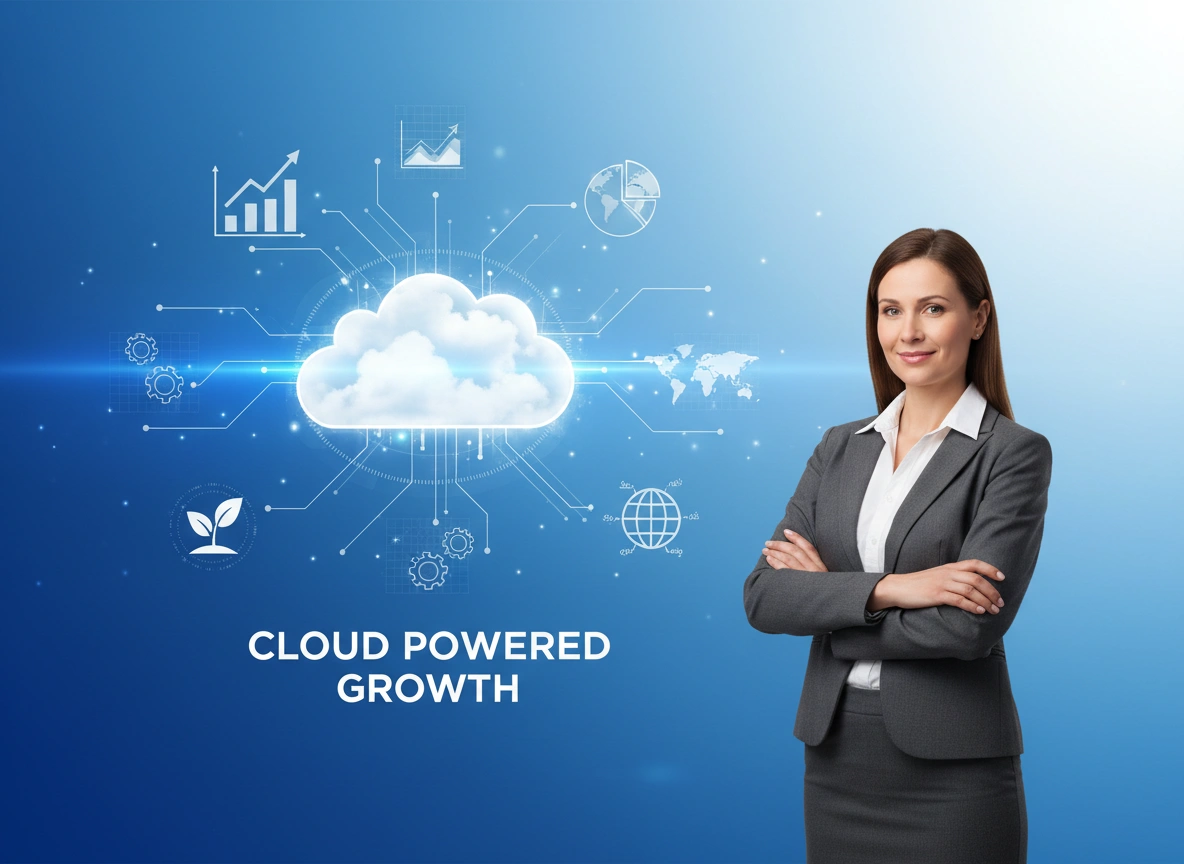
For many years, powerful business technology was the exclusive domain of large corporations with deep pockets. Small businesses often struggled to compete, limited by the high costs of on-premise servers, software licenses, and dedicated IT staff. Today, cloud computing has completely leveled the playing field, offering small and medium-sized businesses (SMBs) access to enterprise-grade tools and infrastructure for a fraction of the cost. This shift is not just an upgrade; it’s a revolution that is fundamentally changing how small businesses operate, grow, and compete.
This article will explore the transformative impact of cloud computing on small businesses. We will cover the significant benefits, from cost savings and enhanced security to unprecedented flexibility. We’ll also look at specific cloud services that are empowering SMBs and discuss how this technology positions them for future success.
Unlocking Major Cost Savings and Predictable Budgets
One of the most immediate and compelling advantages of the cloud for any small business is the drastic reduction in capital expenditure. Before the cloud, setting up a new business or expanding an existing one required a massive upfront investment in physical hardware. This included servers, storage devices, and networking equipment, all housed in a dedicated, climate-controlled room.
From Capital Expenditure (CapEx) to Operating Expenditure (OpEx)
Cloud computing flips this model on its head. Instead of buying, owning, and maintaining your own IT infrastructure, you rent it from a cloud provider like Amazon Web Services (AWS), Google Cloud, or Microsoft Azure. This changes a large capital expense (CapEx) into a predictable operating expense (OpEx).
Small businesses no longer need to tie up significant cash in depreciating hardware. Instead, they pay a monthly or annual fee based on their usage. This pay-as-you-go model frees up vital capital that can be reinvested into other critical areas of the business, such as marketing, product development, or hiring new talent. Furthermore, it eliminates the hidden costs associated with on-premise servers, including electricity, cooling, maintenance, and the physical space they occupy.
Gaining Unprecedented Scalability and Flexibility
Business needs are rarely static. A successful marketing campaign might lead to a sudden surge in website traffic, or a seasonal dip could reduce demand. With traditional infrastructure, scaling up meant buying and installing more hardware—a slow and expensive process. Scaling down was even worse, leaving you with costly, underutilized equipment.
Scale at the Speed of Business
Cloud services provide near-instant scalability. If your business experiences a sudden spike in demand, you can increase your computing resources with just a few clicks. When demand subsides, you can scale back down just as easily, ensuring you only pay for what you use.
This elasticity gives small businesses the agility to respond quickly to market changes. They can launch new applications, test ideas, and enter new markets without the risk of major capital investment. This flexibility empowers SMBs to experiment and innovate at a pace that was once only possible for large enterprises, allowing them to seize opportunities as they arise.
Enhancing Collaboration and Enabling Remote Work
The modern workplace is no longer confined to a single office. The rise of remote and hybrid work models requires tools that allow teams to collaborate effectively from anywhere. Cloud-based productivity suites have become the backbone of this new work paradigm.
Popular Cloud Collaboration Tools
Platforms like Google Workspace and Microsoft 365 are prime examples. These integrated suites offer a host of tools that live in the cloud:
- Email and Calendars: Professional email addresses and shared calendars that sync across all devices.
- Document Creation: Real-time co-authoring on documents, spreadsheets, and presentations, eliminating the confusion of multiple file versions.
- Cloud Storage: Services like Google Drive and OneDrive provide a central, secure location for all company files, accessible from any device with an internet connection.
- Communication: Integrated video conferencing and chat tools (Google Meet, Microsoft Teams) keep teams connected, regardless of their physical location.
Similarly, financial management has been simplified with tools like QuickBooks Online. Instead of being tethered to a single desktop computer, business owners and their accountants can access, update, and manage financial records from anywhere, streamlining processes like invoicing, payroll, and reporting.
Bolstering Data Security and Disaster Recovery
For a small business, data is one of its most valuable assets. A data breach or catastrophic data loss can be devastating. While it may seem counterintuitive to some, moving data to the cloud often results in a significant security upgrade compared to managing it on-premise.
Enterprise-Grade Security for Everyone
Major cloud providers invest billions of dollars in security—far more than any small business could afford. Their data centers feature multiple layers of physical and digital security, including:
- Advanced Firewalls and Threat Detection: Sophisticated systems that monitor for and protect against cyberattacks.
- Data Encryption: Data is encrypted both while it’s being transferred (in transit) and while it’s stored on servers (at rest).
- Compliance Certifications: Providers adhere to a wide range of international security and privacy standards, which helps businesses meet their own regulatory requirements.
Simplified Disaster Recovery
What would happen if your office experienced a fire, flood, or major theft? With on-premise servers, your data could be lost forever. The cloud provides a built-in solution for disaster recovery.
Because your data is stored in geographically distributed data centers, a local disaster will not affect its availability. You and your team can get back to work from any location with an internet connection, ensuring business continuity. Many cloud services also offer automated backup and versioning, making it simple to restore files or systems to a previous state in case of accidental deletion or a ransomware attack.
The Future Is in the Cloud
Cloud computing is no longer a trend; it is a fundamental component of modern business strategy. For small businesses, it has become an indispensable tool for staying competitive. The cloud removes financial and technical barriers, allowing entrepreneurs to focus on what they do best: serving their customers and growing their businesses.
Looking ahead, the role of the cloud will only expand. The rise of artificial intelligence (AI) and machine learning (ML) services, offered through cloud platforms, will provide small businesses with powerful data analysis and automation capabilities. The continued growth of the Internet of Things (IoT) will rely on the cloud’s ability to process and store vast amounts of data.
By embracing cloud computing, small businesses are not just optimizing their current operations; they are future-proofing their organizations. They are building a foundation of agility, scalability, and resilience that will enable them to adapt and thrive in an ever-changing market. The revolution is here, and it’s powered by the cloud.
Please visit this website for more info.
