

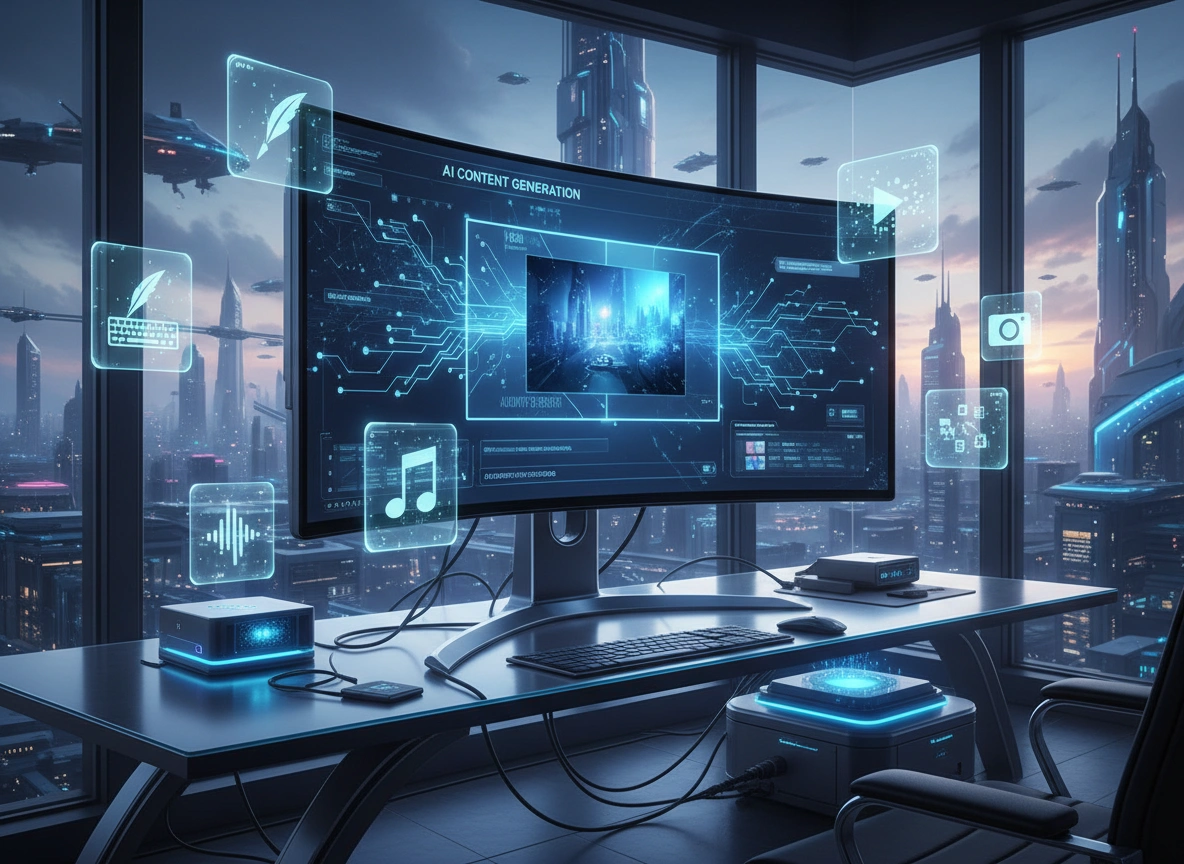
The blinking cursor used to be a writer’s worst enemy. It sat there, mocking the creative process, waiting for inspiration that sometimes never came. Today, that cursor is often accompanied by a silent partner: artificial intelligence. AI has moved far beyond simple spell-checkers and grammar suggestions. It is now a co-creator, a strategist, and a heavy-lifting production assistant all rolled into one.
We are witnessing a fundamental shift in how we conceive, produce, and consume media. From generating initial outlines to creating hyper-realistic images and personalizing user experiences at scale, machine learning algorithms are rewriting the playbook. But what does this mean for human creativity? Is AI a tool that enhances our capabilities, or does it threaten to replace the human touch entirely?
This article explores the transformative impact of AI on content creation. We will examine the advancements in generative tools, the surge in efficiency and personalization, and the critical ethical considerations every creator must navigate in this new landscape.
The Evolution from Automation to Augmentation
To understand where we are going, we need to look at how the role of software has changed. For years, digital tools were about automation. We used software to schedule posts, format text, or check for plagiarism. The human did the creative work; the machine handled the logistics.
Generative AI has changed that dynamic. We have moved from automation to augmentation. Tools like ChatGPT, Claude, and Midjourney don’t just organize existing data; they create new assets based on patterns learned from vast datasets.
This shift allows creators to bypass the “blank page syndrome.” Instead of starting from zero, a writer can ask an AI to generate ten headline ideas or a structural outline. A graphic designer can generate five variations of a logo concept in seconds. The AI acts as a creative sparring partner, throwing out ideas that the human can then refine, curate, and perfect.
Breaking Down the Creator’s Block
One of the most immediate benefits of AI adoption is the elimination of friction in the early stages of creation.
- Idea Generation: AI can brainstorm topics based on trending keywords.
- Drafting: It can produce rough drafts that serve as a foundation for deeper writing.
- Research: AI tools can summarize complex reports, making research faster (though verification remains crucial).
By handling the “grunt work” of creation, AI frees up human creators to focus on higher-level strategy and emotional resonance.
Hyper-Personalization at Scale
Mass media was once defined by a “one-to-many” approach. A single TV commercial or newspaper ad had to appeal to everyone. Digital marketing introduced segmentation, but AI is ushering in the era of “one-to-one” content creation.
AI algorithms analyze user behavior, preferences, and historical data to deliver content tailored specifically to an individual. This isn’t just about recommending a movie on Netflix; it’s about dynamically generating content that speaks to a specific user’s needs.
Dynamic Content Optimization
Imagine an email newsletter that changes its subject line, opening paragraph, and product recommendations based on who opens it. AI tools can now generate thousands of variations of ad copy, testing them in real-time to see which resonates best with different demographics.
This level of personalization extends to:
- Video: AI can alter the lip movements of a speaker to match dubbed languages, making video content universally accessible.
- Web Experiences: Websites can rearrange their layout or highlight specific blog posts based on the visitor’s past interactions.
- Learning Materials: Educational platforms use AI to adapt the difficulty and style of content to match a student’s learning pace.
The result is a more engaging experience for the audience, who feels understood rather than targeted.
Efficiency and the Content Supply Chain
Speed is the currency of the digital age. Brands are under immense pressure to be “always-on,” producing a constant stream of relevant content across multiple channels. Doing this manually is exhausting and expensive. AI provides the scalability required to meet this demand.
Repurposing Content
One of the most powerful applications of AI is in content repurposing. A single long-form video interview can be fed into an AI tool, which then:
- Transcribes the audio.
- Summarizes key points into a blog post.
- Clips short, viral-worthy segments for TikTok and Instagram Reels.
- Generates LinkedIn posts and Twitter threads based on the transcript.
What used to take a team of editors days can now be accomplished in hours. This efficiency reduces the cost of production and ensures that a brand’s message is consistent across every platform.
Enhanced Visual Creativity
Visual content creation has traditionally had a high barrier to entry, requiring expensive software and years of training. Generative image models have democratized this process. Marketers can now generate high-quality, custom imagery for blog headers or social media posts without needing stock photos or a photoshoot. While this doesn’t replace the need for skilled art directors, it allows for rapid prototyping and visual experimentation that was previously impossible.
The Human Element: Why We Still Matter
With all these advancements, it is easy to fall into the trap of thinking human creators are obsolete. This is a misconception. AI is a prediction engine, not a feeling engine. It predicts the next likely word or pixel based on probability, not lived experience.
Emotional Intelligence and Nuance
Great content connects on an emotional level. It requires empathy, humor, irony, and cultural nuance—areas where AI often struggles. An AI can write a technically perfect story about heartbreak, but it cannot draw upon the visceral memory of loss to make the reader weep.
Human creators bring unique perspectives, opinions, and a distinct voice. In a sea of AI-generated content, which can often feel generic or “vanilla,” a strong, authentic human voice becomes more valuable, not less. We act as the tastemakers, curating the AI’s output and infusing it with soul.
Strategic Direction
AI is excellent at tactics but poor at strategy. It can write a blog post, but it doesn’t know why that post should be written or how it fits into a broader brand narrative unless a human guides it. The role of the content creator is evolving into that of a “content director”—someone who orchestrates AI tools to achieve a specific vision.
Ethical Challenges and the Road Ahead
The integration of AI into content creation is not without its dark side. As we embrace these tools, we must grapple with significant ethical and legal challenges.
Copyright and Ownership
Who owns the rights to a piece of art generated by an AI? If an AI model was trained on the work of thousands of human artists without their consent, is the output a form of plagiarism? These questions are currently being litigated in courts worldwide. The answers will define the legal framework of the creative industry for decades.
Misinformation and Deepfakes
The ease of creating realistic content means it is easier than ever to spread misinformation. Deepfakes—AI-generated audio or video that mimics real people—pose a threat to public trust. Content creators have a responsibility to use these tools ethically and to disclose when content is AI-generated.
Quality Control and Hallucinations
AI models can “hallucinate,” confidently stating facts that are entirely false. Relying blindly on AI for content creation can lead to reputational damage. Robust fact-checking and editorial oversight are more critical now than ever before. We cannot outsource our judgment to the machine.
Conclusion: Embracing the Hybrid Future
The future of content creation is not human versus machine; it is human plus machine. We are entering a hybrid era where the most successful creators will be those who learn to leverage AI to amplify their own creativity.
AI offers us the gift of time. By handling the repetitive, logistical, and data-heavy aspects of creation, it allows us to focus on what we do best: storytelling, strategy, and connecting with others. The tools will continue to evolve, becoming more powerful and intuitive. The creators who thrive will be the ones who stay curious, adaptable, and ethically grounded.
Don’t fear the blinking cursor. With AI as your collaborator, you have infinite possibilities at your fingertips. The only limit now is your imagination.
Please click here for more info.
