

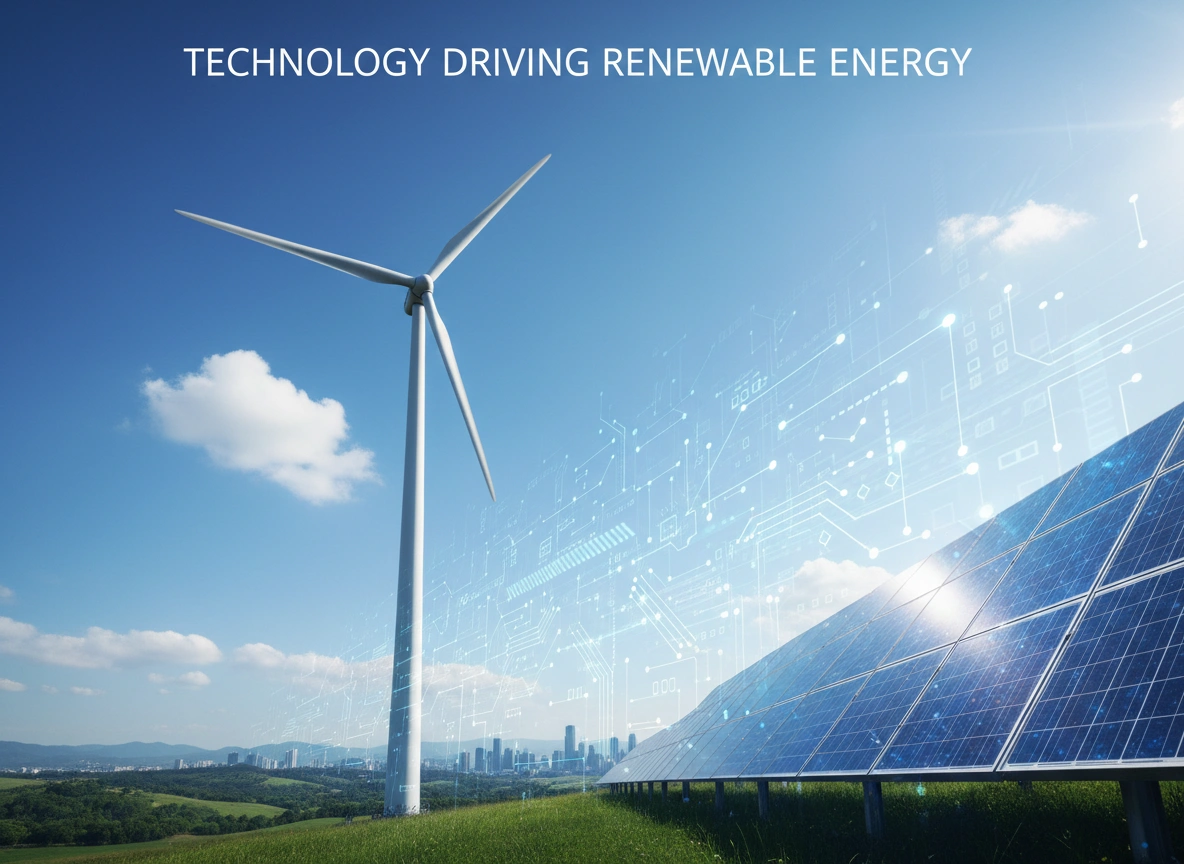
The global shift towards renewable energy is not just a policy change; it’s a full-scale revolution powered by technological innovation. As nations strive to meet ambitious climate goals and reduce their reliance on fossil fuels, advancements in digital and hardware technologies are fundamentally reshaping how we generate, store, and distribute clean power. These innovations are making renewable sources like solar and wind more efficient, affordable, and reliable than ever before, accelerating our transition to a sustainable energy future.
This article explores the critical role technology plays in propelling the renewable energy sector forward. We will examine specific breakthroughs in smart grids, energy storage, artificial intelligence (AI), and the Internet of Things (IoT) that are overcoming historical challenges. By looking at how these technologies are boosting efficiency, slashing costs, and enabling massive scalability, we can understand the path toward a cleaner, more resilient global energy system.
The Evolution of Solar and Wind Power
Solar and wind energy have become the cornerstones of the renewable transition, largely thanks to continuous technological improvements. These are no longer niche alternatives but are rapidly becoming mainstream sources of power, outcompeting fossil fuels on cost in many parts of the world.
Advanced Photovoltaic (PV) Technology
The journey of solar power is a story of relentless innovation. Early solar panels were notoriously inefficient and expensive, limiting their use to specialized applications like satellites. Today, the landscape is completely different. Advancements in photovoltaic materials have led to a dramatic increase in the efficiency of solar cells. Technologies like Passivated Emitter and Rear Cell (PERC), bifacial panels that capture sunlight from both sides, and emerging materials like perovskites are pushing the boundaries of what’s possible.
These improvements have driven a massive reduction in costs. The price of solar PV modules has plummeted by over 90% in the last decade, making solar energy one of the cheapest sources of new electricity generation in history. This cost-effectiveness has enabled a surge in utility-scale solar farms and rooftop installations, democratizing energy production for homeowners and businesses alike.
Smarter, More Powerful Wind Turbines
The wind energy sector has seen a similar trajectory of technological growth. Modern wind turbines are engineering marvels, far removed from their smaller predecessors. Turbine blades are now longer and made from advanced composite materials, allowing them to capture more wind at greater heights where speeds are more consistent. Direct-drive systems, which eliminate the need for a gearbox, reduce maintenance costs and increase reliability.
Furthermore, turbine design is becoming smarter. Integrated sensors and control systems allow turbines to adjust their blade pitch and orientation in real-time to maximize energy capture and minimize stress during extreme weather. This combination of size, efficiency, and intelligence has significantly increased the capacity factor of wind farms, making them a more consistent and dependable source of power.
Smart Grids: The Digital Backbone of Renewable Energy
One of the biggest challenges with renewable energy sources like solar and wind is their intermittent nature—the sun doesn’t always shine, and the wind doesn’t always blow. Integratingこれらの variable sources into a traditional, centralized power grid designed for constant fossil fuel output is a complex task. This is where smart grids come in.
A smart grid is a modernized electrical grid that uses information and communication technology to gather and act on information about the behavior of suppliers and consumers. This two-way communication allows for unprecedented levels of control and automation. For renewables, this means the grid can dynamically balance supply and demand.
When solar production peaks in the middle of the day, a smart grid can divert excess power to energy storage systems or encourage consumption through dynamic pricing. When a cloud passes over or the wind dies down, it can instantly draw power from storage or other available sources to prevent blackouts. This real-time management transforms the grid from a passive delivery system into an active, intelligent network, ensuring stability and reliability even with high levels of renewable penetration.
Energy Storage: Solving the Intermittency Puzzle
If smart grids are the nervous system of the new energy landscape, then energy storage solutions are the vital organs that keep it running smoothly. The ability to store energy when it’s plentiful and release it when it’s needed is the key to unlocking the full potential of renewables.
The Rise of Battery Storage
Lithium-ion batteries, the same technology powering our smartphones and electric vehicles, are leading the charge in grid-scale energy storage. The costs for these batteries have fallen by nearly 85% over the past decade, making large-scale battery farms economically viable. These facilities, often co-located with solar or wind farms, can store megawatts of power, ready to be deployed in seconds. They help smooth out the fluctuations in renewable generation, provide grid stability services, and can even offer backup power during outages.
Beyond Lithium-Ion
While lithium-ion technology is dominant, research into alternative storage solutions is flourishing. Flow batteries, which store energy in liquid electrolytes, offer the potential for longer-duration storage and greater scalability. Pumped-hydro storage, a mature technology that uses gravity to store energy by pumping water uphill, is also seeing renewed interest. Other emerging technologies like compressed air energy storage (CAES) and green hydrogen production promise to provide the long-duration storage needed to get through days or even weeks of low renewable output.
AI and IoT: Optimizing Every Watt
Artificial intelligence and the Internet of Things are the intelligence layer that optimizes the entire renewable energy ecosystem. By deploying a vast network of sensors (IoT) and analyzing the resulting data with sophisticated algorithms (AI), energy producers and grid operators can make smarter, faster decisions.
AI in Predictive Maintenance and Forecasting
In the renewable sector, AI is transforming operations and maintenance. AI algorithms can analyze data from sensors on wind turbines and solar panels to predict when components might fail. This allows for predictive maintenance, reducing downtime and cutting operational costs. Instead of reacting to a broken part, operators can replace it proactively during a scheduled maintenance window.
AI is also revolutionizing energy forecasting. By analyzing historical weather data, satellite imagery, and real-time atmospheric conditions, machine learning models can predict solar and wind output with remarkable accuracy. These precise forecasts are invaluable for grid operators, helping them plan and balance the grid minute by minute.
The Role of IoT in Energy Management
The Internet ofThings connects everything from individual solar panels and smart thermostats in homes to large-scale wind turbines and substations. This network of connected devices generates a torrent of data that provides a granular view of the entire energy system. For example, IoT sensors on a solar farm can identify underperforming panels that may be dirty or malfunctioning, allowing for swift correction. In our homes, smart appliances connected to the IoT can automatically adjust their energy usage based on real-time grid conditions and pricing, helping to balance demand without any effort from the consumer.
A Look to the Future
The fusion of technology and renewable energy is creating a virtuous cycle. As technology improves, the cost of renewables falls, driving wider adoption. This increased scale, in turn, fuels further investment in research and development, leading to even more advanced technology. The pace of innovation shows no signs of slowing down.
Looking ahead, we can expect to see even more integration between these technologies. Imagine a fully autonomous energy grid managed by AI, where distributed energy resources from rooftop solar, electric vehicles, and community batteries all work in concert to power our society. Blockchain technology could enable secure, peer-to-peer energy trading, allowing homeowners to sell their excess solar power directly to their neighbors.
Technology is not just an enabler of the renewable energy revolution; it is the engine driving it. Through continuous improvements in hardware, the digital intelligence of smart grids, the flexibility of energy storage, and the optimization power of AI, we are building a more sustainable, resilient, and equitable energy system for generations to come. The path to achieving global sustainability goals is paved with these technological breakthroughs.
Please click here for more info
