

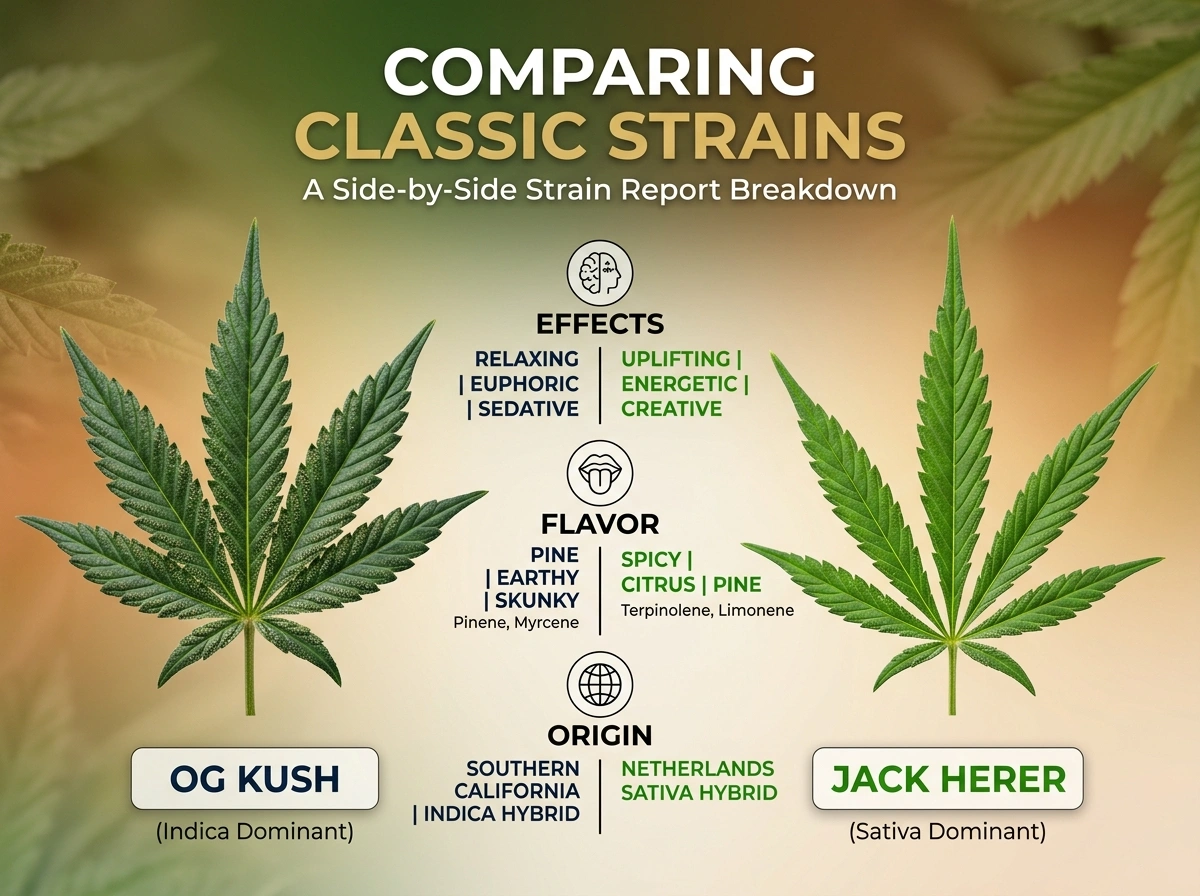
Walk into any dispensary from California to Colorado, and you’ll spot the same familiar names on the shelf. OG Kush. Blue Dream. Sour Diesel. These classic strains have earned their reputation over decades, and they remain some of the most requested cultivars in the United States. But “classic” doesn’t mean “interchangeable.” Each strain delivers a distinct experience shaped by its genetics, chemistry, and growing history.
Whether you’re a seasoned consumer or someone refining your preferences, understanding how these strains stack up helps you make smarter, more confident choices. This breakdown compares five legendary strains across the categories that matter most: origin and genetics, aroma and flavor, cannabinoid content, effects, medical applications, and the ideal consumer for each.
Why Side-by-Side Comparison Matters
Cannabis isn’t one product. It’s thousands of variations, each with its own chemical fingerprint. Two strains might share the same THC percentage yet produce wildly different experiences thanks to terpenes, minor cannabinoids, and individual body chemistry.
That’s why data-driven resources matter. A detailed Strain report gives you lab-tested cannabinoid and terpene profiles, helping you move beyond marketing hype and toward informed decisions. When you compare strains using consistent, verifiable information, you spend less time guessing and more time enjoying the right product for your goals.
Keep in mind that cannabis laws vary widely from state to state. Always purchase from licensed, compliant retailers and follow your local regulations.
The Five Classics at a Glance
|
Strain |
Type |
Typical THC |
Dominant Effect |
Best For |
|---|---|---|---|---|
|
OG Kush |
Hybrid (Indica-leaning) |
19–26% |
Relaxed euphoria |
Evening unwinding |
|
Blue Dream |
Hybrid (Sativa-leaning) |
17–24% |
Balanced uplift |
Daytime creativity |
|
Sour Diesel |
Sativa |
19–25% |
Energetic focus |
Productivity |
|
Girl Scout Cookies |
Hybrid |
19–28% |
Heavy euphoria |
Mood and pain relief |
|
Northern Lights |
Indica |
16–21% |
Full-body sedation |
Sleep and deep rest |
OG Kush: The West Coast Legend
Origin and genetics: OG Kush rose to fame in the 1990s, with murky but widely debated roots tracing back to Chemdawg and Hindu Kush lineage. It became the backbone of countless modern hybrids, especially across California.
Aroma and flavor: Expect earthy, piney notes with a sharp citrus and fuel undertone. The terpene profile leans heavily on myrcene, limonene, and caryophyllene.
Cannabinoid content: THC typically lands between 19% and 26%, with minimal CBD.
Effects: OG Kush delivers a heavy-hitting blend of mental euphoria and physical relaxation. It starts cerebral, then settles into a calming body buzz.
Medical uses: Consumers often turn to it for stress, chronic pain, and appetite stimulation.
Ideal consumer: Someone seeking deep relaxation after a long day, with enough tolerance to handle a potent hybrid.
Blue Dream: The Crowd-Pleaser
Origin and genetics: A cross between Blueberry and Haze, Blue Dream emerged from California and quickly became a national favorite for its balanced, approachable high.
Aroma and flavor: True to its name, it carries sweet berry notes layered over herbal, floral tones. Myrcene and pinene dominate the profile.
Cannabinoid content: THC usually ranges from 17% to 24%, again with low CBD.
Effects: Blue Dream offers gentle cerebral stimulation paired with soothing body relaxation. It rarely overwhelms, which explains its broad appeal.
Medical uses: Popular for managing mild depression, fatigue, and everyday aches without heavy sedation.
Ideal consumer: Beginners and moderate consumers who want a functional, daytime-friendly experience.
Sour Diesel: The Energizer
Origin and genetics: Often linked to Chemdawg and Super Skunk, Sour Diesel built its reputation on the East Coast before spreading nationwide.
Aroma and flavor: The name says it all. Pungent diesel and fuel notes meet sharp citrus and skunky undertones, driven by caryophyllene and limonene.
Cannabinoid content: THC commonly sits between 19% and 25%.
Effects: This sativa delivers fast-acting, energizing, and uplifting effects. Many describe a dreamy, talkative head high that sparks creativity.
Medical uses: Frequently chosen for depression, stress, and low energy.
Ideal consumer: Daytime users, creatives, and anyone needing a productivity boost rather than couch-lock.
Girl Scout Cookies: The Modern Powerhouse
Origin and genetics: A Bay Area creation, GSC crosses OG Kush with Durban Poison. It set a new standard for potency and flavor in the 2010s.
Aroma and flavor: Sweet and earthy with hints of mint, chocolate, and spice. Caryophyllene, limonene, and humulene shape its rich bouquet.
Cannabinoid content: THC can climb as high as 28%, making it one of the stronger classics.
Effects: GSC produces intense euphoria followed by full-body relaxation. The high is potent and long-lasting.
Medical uses: Often used for chronic pain, severe stress, nausea, and appetite loss.
Ideal consumer: Experienced consumers who want maximum potency and a deeply euphoric experience.
Northern Lights: The Sleep Specialist
Origin and genetics: One of the oldest pure indicas, Northern Lights descends from Afghani and Thai landrace genetics. It’s a foundational strain in cannabis breeding history.
Aroma and flavor: Sweet, earthy, and slightly spicy with pine accents. Myrcene leads the terpene lineup.
Cannabinoid content: THC typically ranges from 16% to 21%, modest by modern standards but plenty effective.
Effects: This strain delivers deep, full-body sedation and a dreamy mental calm. It’s the definition of a nightcap.
Medical uses: A go-to for insomnia, pain, muscle tension, and anxiety.
Ideal consumer: Anyone seeking restful sleep or relief from physical discomfort at the end of the day.
How to Read the Differences
Notice how these strains cluster around purpose. Sour Diesel and Blue Dream serve daytime energy and balance, while OG Kush, GSC, and Northern Lights lean toward evening relaxation and recovery.
Terpenes tell much of the story. Myrcene-heavy strains like Northern Lights tend to feel more sedating, while limonene-rich profiles like Sour Diesel often feel brighter and more uplifting. THC percentage matters, but it’s only one piece of the puzzle. Two strains at 22% THC can feel completely different depending on their terpene and minor cannabinoid content.
Your own body chemistry plays a role too. The strain that energizes a friend might relax you. Start low, go slow, and track what works for your goals.
Making Smarter Choices With Strain Data
Classic strains earned their status for good reason, but reputation alone shouldn’t drive your purchase. The smartest approach combines your personal goals with verified lab data.
Before you buy, check the cannabinoid percentages and terpene profile for the specific batch in front of you. Two jars of “Blue Dream” from different growers can vary significantly. A reliable strain database lets you compare those details side by side, so you know exactly what you’re getting.
Use comparison tools to match strains to your needs: energy versus rest, focus versus relaxation, mild versus intense. Pay attention to dominant terpenes, not just THC. And always buy from licensed retailers that provide transparent testing results.
The bottom line is simple. When you treat strain reports as a research tool rather than skipping straight to the shelf, you make decisions grounded in facts. That means fewer disappointing sessions, better-targeted relief, and a more enjoyable, personalized cannabis experience every time.
