

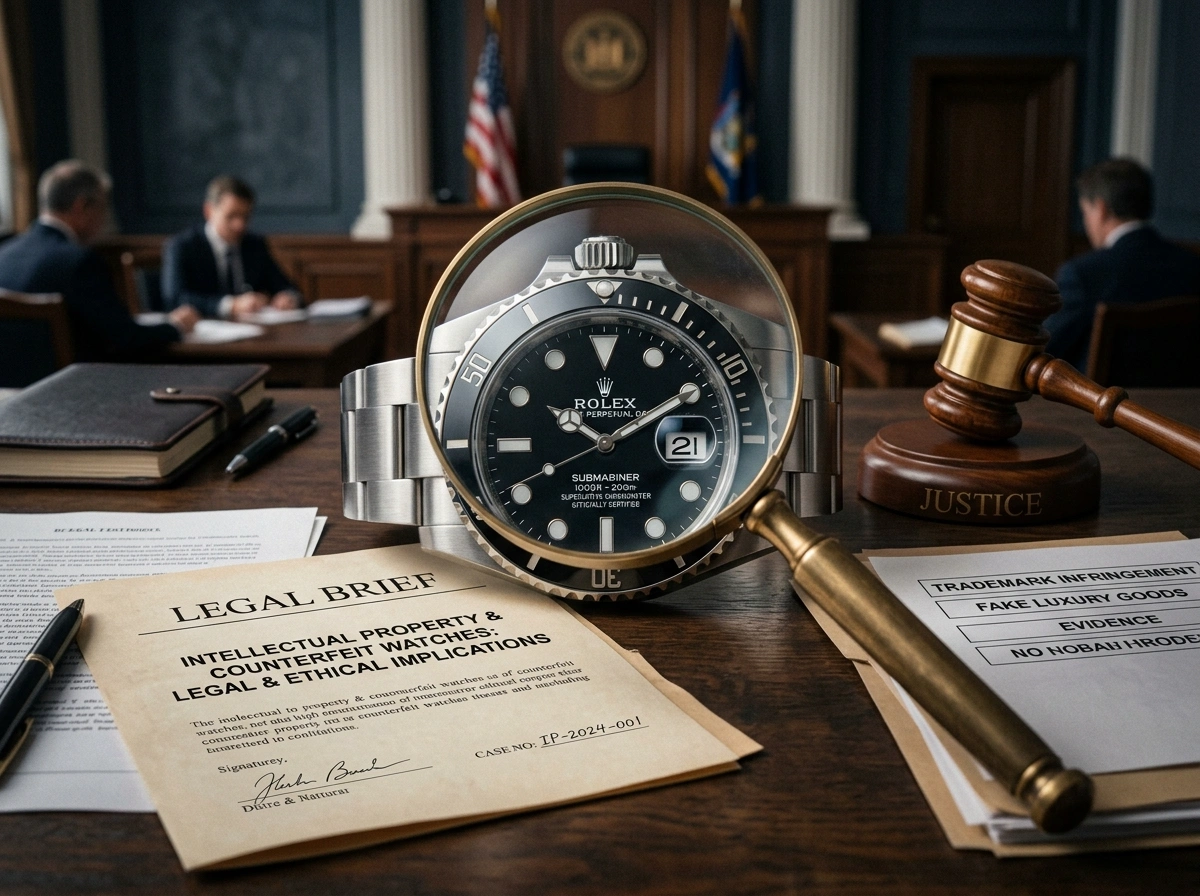
A luxury watch on the wrist signals craftsmanship, status, and decades of brand heritage. That prestige is exactly why counterfeiters target the industry so aggressively. Fake watches now flood online marketplaces, social media ads, and street stalls worldwide, often looking nearly identical to the genuine article.
But behind a convincing dial and a tempting price tag sits a tangle of legal violations and ethical problems. In this article, you’ll learn how counterfeit watches break intellectual property law, why buyers face real fraud and safety risks, how these products connect to labor abuse and organized crime, and what ethical responsibilities fall on both sellers and consumers.
What Counts as a Counterfeit Watch
A counterfeit watch is any timepiece that copies a brand’s trademarks, logos, designs, or model names without authorization, then passes itself off as the real product. This differs from “homage” watches, which take design inspiration but carry their own branding.
The intent matters. Counterfeits aim to deceive—either the buyer or someone the buyer later resells to. Terms like “replica,” “super clone,” or “mirror copy” are marketing labels designed to soften that deception, but legally they describe the same thing: unauthorized goods that infringe a brand’s rights.
Key takeaway: If a product borrows a protected logo or name to mimic a genuine brand, it’s counterfeit regardless of the label sellers use.
The Legal Risks: Trademark and IP Law
Counterfeiting is not a gray area. It violates well-established intellectual property protections in nearly every country.
Trademark Infringement
Watch brands register their names, logos, and even distinctive design elements as trademarks. Producing or selling a watch that uses these marks without permission is direct trademark infringement. In the United States, the Lanham Act governs these cases, while the EU and many other regions have parallel laws.
Penalties can be severe. Sellers face civil lawsuits, seizure of goods, and substantial financial damages. In many jurisdictions, trafficking in counterfeit goods is also a criminal offense carrying fines and prison time.
Customs Seizures and Import Violations
Customs authorities routinely intercept counterfeit shipments. U.S. Customs and Border Protection seizes millions of dollars in fake watches and jewelry every year. A buyer who imports a counterfeit may have the package confiscated and could face penalties, even if they claim they didn’t know.
Liability for Resellers
People who resell counterfeits—knowingly or not—can be held liable too. Selling a fake on a secondhand platform doesn’t shield you. If the item infringes a trademark, you can be pulled into legal action and banned from the platform.
Key takeaway: Both makers and sellers carry real legal exposure, and “I didn’t know” rarely works as a defense.
Fraud and Safety Risks for Buyers
Buying a counterfeit isn’t just legally risky—it often means getting cheated, even when you know the watch is fake.
- Misrepresentation: Some sellers market counterfeits as genuine to charge premium prices, defrauding buyers outright.
- Poor quality: Fakes frequently use substandard movements, weak water resistance, and cheap materials that fail quickly.
- No warranty or service: Authorized service centers won’t repair counterfeits, leaving buyers stranded.
- Resale traps: Reselling a fake as authentic exposes you to fraud claims and legal consequences.
There’s also a data risk. Many counterfeit sellers operate on insecure sites that harvest payment details, leading to credit card fraud and identity theft. The “deal” can cost far more than the watch.
Key takeaway: A counterfeit offers no guarantees, no support, and real exposure to fraud—on both ends of the transaction.
Labor and Human Rights Concerns
The supply chains behind counterfeit goods are largely unregulated, and that creates serious ethical problems.
Counterfeit production often happens in unauthorized factories with no oversight. Reports from international agencies link these operations to unsafe working conditions, child labor, forced labor, and wages far below legal minimums. Because the entire enterprise is illegal, workers have no protections and no recourse.
When you buy a fake, you may be funding a system that exploits vulnerable people. Genuine manufacturers, whatever their flaws, operate under labor laws, audits, and public scrutiny. Counterfeit operations answer to no one.
Key takeaway: The low price of a counterfeit is often subsidized by human suffering hidden inside the supply chain.
The Link to Organized Crime
Counterfeiting is rarely a small, independent operation. Law enforcement agencies, including INTERPOL and Europol, have documented strong ties between counterfeit goods and organized crime networks.
The profits from fakes are high and the penalties relatively low compared to drug or weapons trafficking, making counterfeiting attractive to criminal groups. These networks frequently use the proceeds to fund other illegal activities, including money laundering and smuggling.
So a single counterfeit purchase rarely stays isolated. It can feed into a much larger illicit economy that undermines legitimate businesses and tax systems while financing further crime.
Key takeaway: Buying counterfeits can indirectly support criminal enterprises far beyond the watch itself.
Reputational Harm to Brands
Counterfeits damage the brands they imitate in lasting ways.
When fakes flood the market, they dilute the exclusivity that luxury brands rely on. If everyone seems to own a “super clone rolex for sale,” the genuine item loses some of its prestige. Brands also suffer when poor-quality counterfeits break down and frustrated owners blame the real company.
Companies spend enormous sums fighting this—on legal teams, anti-counterfeiting technology, and customer education. Those costs ripple through to pricing and innovation. Counterfeiting isn’t a victimless shortcut; it imposes real burdens on the businesses that create value in the first place.
Ethical Implications for Buyers and Sellers
Beyond the law, counterfeit watches raise honest ethical questions worth weighing.
For Buyers
- Deception of others: Wearing a fake as if it were real misrepresents your purchase to everyone who sees it.
- Funding harm: Your money may support labor abuse and organized crime.
- Eroding trust: Counterfeit demand fuels a market built on dishonesty.
Ask yourself whether the appearance of luxury is worth participating in that chain.
For Sellers
Selling counterfeits crosses a clearer ethical line. It involves knowingly profiting from someone else’s intellectual property while exposing customers to fraud and unsafe products. Even framing items as “replicas for collectors” doesn’t change the underlying harm.
Key takeaway: The ethics extend beyond legality—every counterfeit transaction touches issues of honesty, exploitation, and harm.
How to Protect Yourself and Make Better Choices
If you want a luxury watch without these risks, consider these practical steps:
- Buy from authorized dealers or the brand directly to guarantee authenticity.
- Explore the certified pre-owned market for genuine watches at lower prices, with documentation.
- Consider affordable authentic brands that offer real craftsmanship within your budget.
- Verify before buying secondhand—check serial numbers, papers, and seller reputation.
- Be skeptical of deep discounts on luxury items; if the price seems impossible, the watch likely is too.
These choices let you enjoy quality timepieces without the legal, ethical, or financial fallout of counterfeits.
Conclusion
Counterfeit watches may look like a clever bargain, but they sit at the center of serious legal and ethical problems. They infringe trademarks, expose buyers and sellers to fraud and legal penalties, and often rely on exploited labor and organized crime. They also harm the very brands that built the designs being copied.
The smarter path is to buy authentic—whether new, pre-owned, or from a reputable affordable brand—so your purchase reflects genuine value rather than hidden costs. Before your next watch purchase, take a moment to verify the source and consider what your money truly supports. An honest timepiece is always worth more than a convincing fake.
